 [1]
[1]It is 9 o’clock AM on a beautiful, sunny day in May. The hospital is bustling and doctors and nurses hurry through the hallways. Over the intercom, a voice says “Paging Dr. France, please come to the pediatric ward.” I make my way to the place I spend about 10 hours a day. Some of the children are in the playroom while others are still lying in bed watching morning cartoons. I have been called to check on an eight-year-old boy suffering from Leukemia. I walk into the room and a smile appears on his face, despite the incredible amount of discomfort he is experiencing. I proceed to visit with him, chatting about the new stuffed animal his family brought him and the high score he made playing Nintendo the night before. We then move on to discuss his pain and soreness.
And so begins a day in the life of a Pediatric Oncologist, a life that will someday be mine.
 [2] (This is a picture drawn by a little girl for her pediatric oncologist who helped her battle cancer.)
If someone is looking to help others, one of the many fields to enter is the medical field. “There’s no place special we have to be in order to help out” [3] on a day-to-day basis; opportunity to serve others seem to jump out at in nearly every facet of our life. I have taken advantage of many of these opportunities to help, from visiting the nursing homes to working with special needs children to being a staff member at leadership camps. Having worked with a wide-range of people, I have come to the conclusion that I would like to spend my life helping these children, particularly those diagnosed with cancer.
The next question is “where do I begin?”
Having decided on the medical field many years ago, I began the process of becoming a doctor at a young age by focusing on my schoolwork and exploring my college options. When I was in middle school, I thought I would attend the University of Michigan, go to medical school in Michigan or California and proceed on to become a doctor.
 [4] Senior year came along and my acceptance letter into Plan II Honors showed up at my doorstep. Unfortunately, scholarships that would help my parents pay the $42000 it would cost for me to attend Michigan did not.
  [5] To be honest, I had not planned on being accepted into Plan II; I thought it was a liberal arts program that only wanted liberal arts students, not science majors. After visiting the campus and attending a World Literature class, I chose to attend the University of Texas at Austin, basically the best school in the world.
I am often asked the question, “What do you do with a Plan II degree?” I have wondered this myself many times. Won’t I be more prepared for medical school if I major in something like biology or chemistry? Why would medical schools care if I took philosophy and Middle Eastern history? Well, as I have come to learn, there are many advantages to being in Plan II for pre-med students.
First, medical schools are looking for well-rounded students who have been educated in areas other than science. Often times, liberal arts degrees incorporate the humanities and social sciences, important courses that cover more of the social issues that are present today.
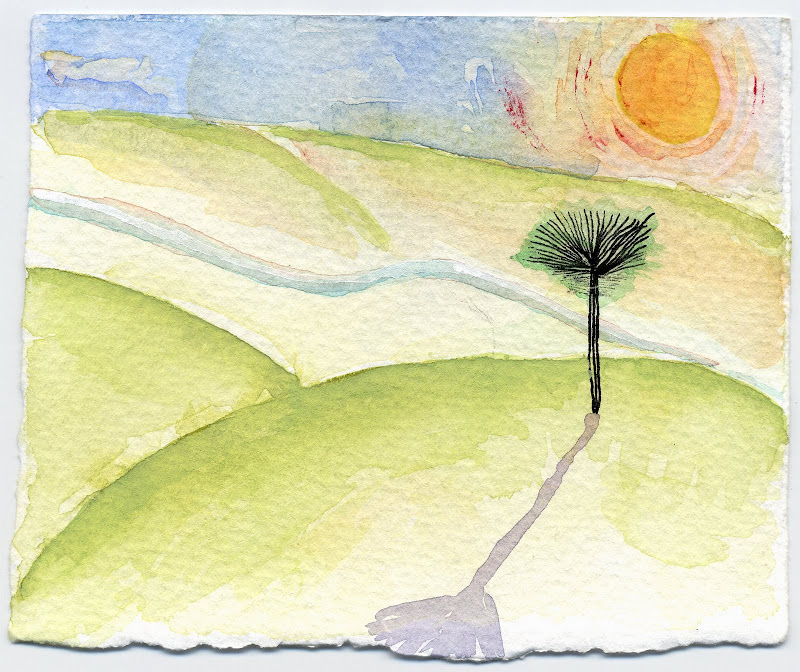
 [6] (The calmness and serenity of the stream is rarely seen in modern day medicine.) A recent concern in the health professions is the lack of compassion in the, with many doctors focusing solely on the cure rather than the relationships formed with the patients. Taking courses that focus on human relations and personal interactions can prove to be very valuable in the medical field. Many feel that “to truly help people suffer less, we need to combine our knowledge and medical skills with a compassionate attitude that helps the patient relax and have confidence in their care” [7].
Second, as a part of the Plan II Honors program, I am automatically set apart from many of the typical medical school applicants with a degree in human biology or biochemistry. The Associate Dean of the University of Texas Health Science Center in San Antonio is my dad’s colleague and a family friend. He has spoken with my father many times about the attractiveness of a Plan II major on a medical school application. He has said that the intensity of Plan II classes and the course variety prepares students for the challenges that they will come across in med school, as well as shows determination and a strong work ethic. Since making it into Plan II and taking these classes, I have begun to understand why it is such a highly esteemed program, and I am extremely grateful to be a part of it.
Subjecting myself to and surviving an intense program is simply the beginning of my plans to become a doctor and making a difference. There are many steppingstones on the way to accomplishing my goals. From here on out, it is a matter of “getting my ducks in order” and being actively engaged in the community, particularly the health community.
As I was sitting here trying to decide on what my next step in the process is, I realized that everything I am doing is preparing me in one way or another for medical school, a medical profession, and my overall goal of helping those in need. This summer, I am going to be an Orientation Advisor and a Camp Texas counselor. One may ask, “How in the world does this have anything to do with being a pediatric oncologist?” From a surface view, it may seem as though they are completely independent of each other, however if you look deeper, there is a connection that will prove to be very valuable. A huge part of being a doctor is working with different kinds of patients suffering from various ailments, many with over-concerned and anxious friends and family members, making them extremely hard to communicate with. As an Orientation Advisor and counselor, I will be interacting with people from all over the country and perhaps the world, teaching me how to communicate successfully with others who may be entirely different from me. I am certain that in these positions I will be responsible for students who are difficult to get along with. At the time, it will be extremely frustrating, as it has been in the past when I’ve been put into similar situations, however in the end, it is simply another learning experience that will better prepare me for the real world of doctor-patient relationships.
Another way to get involved in the health community was presented to me while writing this paper, ironically, by a friend who is an active member of student government, SG. I have spoken with him multiple times about my desire to become involved in SG and so when he found out that a position on the Student Health Advisory Committee (SHAC) was open, he advised I get my application in quickly, suggesting I would be a very good person for this position.
 [8] (I am hoping to become a part of the judicial section of the school.) As a member of SHAC, I would have the opportunity of working with the president of University Health Services, as well as other prominent members of the health community. This would be a prime position for me to form connections as well as learn more about health services and begin making a difference in policies and programs offered to the student body.
Being actively engaged and having experience in the actual medical field is also a critical part of the learning and preparation process. The doctor who performed a surgery on my legs over Christmas break has offered to have me shadow him during routine patient visits as well as stand in on orthopedic surgeries throughout the summer on my days off from being an Orientation Advisor. This will be an exciting and interesting introduction to surgery and will give me a first hand glimpse at doctor-patient relationships. Beginning next fall or spring, depending on time commitments for school, I will volunteer at local hospitals, assisting in any way I can and hopefully having a chance to volunteer in the pediatric ward.
I think it is important to be involved in activities other than those connected with medicine, so I am going to continue to participate in extracurricular activities and organizations, such as ABSOLUTE TEXXAS, that focus on community service, UT spirit and social events.
I believe many doctors and physicians underestimate the impact their attitude has on the patient and the recovery process. Often times, patients believe they “cannot rise out of [their] bed till the physician enables [them], nay [they] cannot tell that [they are] able to rise till he tell [them] so. [They] do nothing, [they] know nothing of [themselves]” [9]. As a pediatric oncologist, I will be dealing with patients who are seriously ill and “their physical situation may be amplified by a lot of anguish and fear. They develop a great deal of hope that the doctor will be able to help them, but the hope is countered by the fear that nothing can be done, that perhaps the situation is hopeless” [10]. I will serve as a source of support for their patients and reveal the light at the end of the tunnel that shows that recovery is possible.

[11] (The trek to become a doctor will be well worth it in the end.)
The journey to become a pediatric oncologist, or any doctor for that matter, is a long and challenging one full of obstacles and hardship. It is a path scattered with stones, rocks, and boulders. Many begin and stumble, forcing them to take another path. I know that “somewhere deep within many of us is a vision of how helping would flow from trust in ourselves and in others” [12]. I am lucky enough to have the support of my friends and family and the belief in myself to push through and do what I so strongly desire to do: make a difference. I recently came upon a journal I had when I was in first grade. As many journals have, the first page was an “About Me” page, allowing me to name my favorite color, best friends, favorite hobbies, etc. The last item on the page read the following: “When I grow up I want to…” As a first grader, with dreams as big as the sky, I had written in “help other.” And to this day, if someone were to ask me what I want to do when I grow up, I would simply respond, “help others.”
Word Count w/o quotes: 1615
Word Count w/ quotes: 1761
[1] Luelu University of Technology, http://www.ltu.se/polopoly_fs/1.5705!ee7b8afa.jpg, (accessed March 28, 2008)
[2] Gift of Life, http://www.giftoflife.org/photos/Artwork.jpg (accessed March 28, 2008)
[3] Ram Dass and Paul Gorman, How Can I Help? (California: Whatever Publishing, Inc., 1981), 236.
[4] Far Horizons, http://far-horizons.biz/catalog/images/37823.jpg (accessed March 28, 2008)
[5] Tribal Finance, http://www.tribalfinance.org/images/Michigan%20Logos/Split-M-Maize-bar.gif (accessed March 28, 2008)
[6] Heartfelt Medicine http://www.heartfeltmedicine.com/images/website_pic_light_rays.jpg (accessed March 28, 2008)
[7] Chokyi Nyima Rinpoche, Medicine and Compassion (Massachusetts: Wisdom Publications, Inc., 2006), 171.
[8] Student Government http://www2.umaine.edu/StudentGovernment/Student%20Government%20Files/home.h9.jpg (accessed March 28, 2008)
[9] Oliver Sacks, A Leg to Stand On (New York: Touchstone, 1993), 21.
[10] Ram Dass and Paul Gorman, How Can I Help? (California: Whatever Publishing, Inc., 1981), 31.
[11] Picasa Web, http://images.google.com/imgres?
imgurl=http://lh3.google.com/_wJT82EBJElw/RrB2F3QGYuI/AAAAAAAAANU/QK5sS489GQ/s800/P1060809.JPG&imgrefurl=http://picasaweb.google.com/lh/photo/5-aGmRN2y0XoARQHzqGj6w&h=800&w=600&sz=149&hl=en&start=4&um=1&tbnid=Sgui-l_vjVg7VM:&tbnh=143&tbnw=107&prev=/images%3Fq%3Ddifficult%2Bpath%26um%3D1%26hl%3Den%26sa%3DG
[12] Ram Dass and Paul Gorman, How Can I Help? (California: Whatever Publishing, Inc., 1981), 182.


+on+a+summer+day.jpg.jpg)